

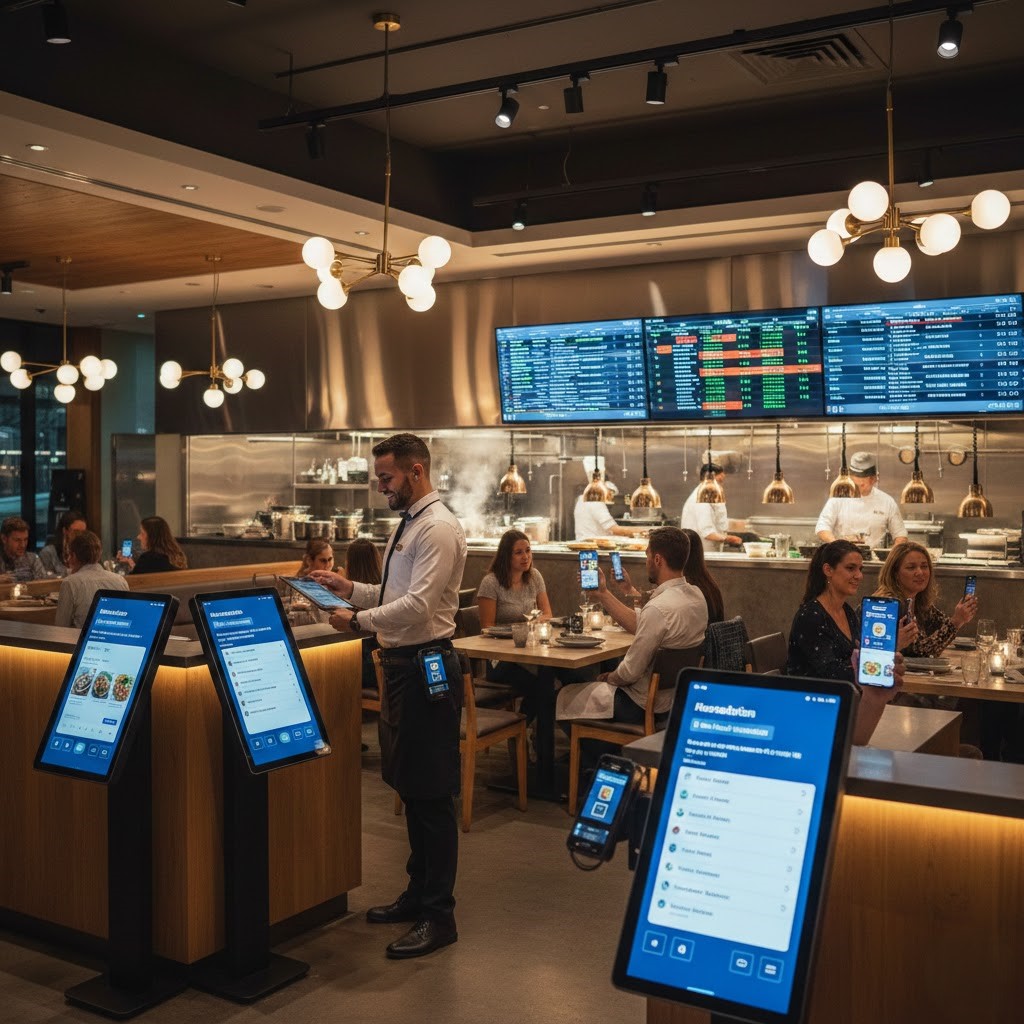
Restaurants today are more than kitchens and dining rooms. They’re technology-powered businesses that rely on digital tools to enhance guest experience, streamline operations, and maximize revenue. From reservation platforms to kitchen automation, the right tech stack can make the difference between a thriving restaurant and one that struggles to keep up.
In this guide, we explore the top restaurant technologies transforming the industry—how they work, why they matter, and how your business can benefit.
Why Restaurant Technology Matters
Before diving into specific tools, it’s essential to understand the stakes.
Customers now expect:
- Instant online booking
- Mobile ordering
- Contactless payments
- Real-time waitlist updates
- Fast, accurate service
Meanwhile, restaurant owners face pressure to:
- Reduce operational costs
- Increase table turnover
- Manage inventory accurately
- Analyze performance data
- Deliver personalized customer experiences
Today’s restaurant tech doesn’t just support operations—it enhances profitability and customer loyalty.
Let’s explore the most impactful technologies reshaping dining.
1. AI Reservation & Table Management Systems
Reservations are the heartbeat of any restaurant.
Traditional phone-based bookings are limiting:
- Reservations only during business hours
- Manual errors and double bookings
- Missed revenue opportunities
AI-powered reservation systems solve these problems:
- 24/7 online booking
- Automated confirmations & reminders
- Smart table allocation based on party size
- Real-time availability across platforms
- No-shows reduced through automated messages
These systems act like a virtual front-of-house manager, ensuring your tables are booked efficiently and guests receive instant confirmations.
With the right AI tool, your restaurant turns scheduling into a reliable revenue engine, not a logistical headache.
2. Contactless & Mobile Ordering Platforms
The rise of mobile ordering has accelerated dramatically.
Today’s diners want:
- QR code menus
- Easy customization
- Seamless checkout
- Order ahead & pickup options
Contactless platforms deliver exactly that.
Benefits include:
- Faster order processing
- Reduced wait times
- Improved accuracy
- Increased average check sizes
Restaurants that embrace mobile ordering often see higher customer satisfaction and greater repeat business, especially among tech-savvy diners.
3. Point of Sale (POS) Systems with Integrated Analytics
Modern POS systems do much more than process payments.
Today’s POS platforms provide:
- Real-time sales tracking
- Inventory management
- Staff performance insights
- Customer purchase history
- Integrated online ordering data
These systems connect the front of house and back of house in ways older cash registers never could.
With robust POS analytics, restaurants make smarter decisions about:
- Menu pricing
- Staffing levels
- Stock ordering
- Promotion performance
Data becomes a competitive advantage, not just numbers on a report.
4. Kitchen Display Systems (KDS)
In busy kitchens, paper tickets can cause chaos.
Kitchen Display Systems replace printed order slips with:
- Digital screens showing real-time orders
- Prioritized tasks
- Time-tracking for each dish
- Clear communication between kitchen stations
KDS systems reduce errors, speed up ticket times, and help ensure every plate leaves the kitchen perfect.
They also sync with POS and ordering platforms so chefs never miss an order and can manage workflow intelligently.
5. Waitlist & Guest Messaging Tools
Nobody likes waiting—especially without updates.
Waitlist technology lets restaurants:
- Send SMS notifications when a table is ready
- Estimate wait times
- Allow guests to join virtually
- Reduce lobby congestion
By integrating guest messaging, restaurants improve:
- Seating accuracy
- Turnover efficiency
- Overall guest experience
A digital waitlist leads to happier customers and smoother service flow.
6. Loyalty Programs & CRM Systems
Repeat customers are the backbone of a profitable restaurant.
CRM (Customer Relationship Management) tools help you:
- Track customer preferences
- Segment guests by behavior
- Run targeted promotions
- Reward loyalty with points & perks
When loyalty programs are tied to transaction data, restaurants gain deeper insight into:
- High-value customers
- Menu favorites
- Visit frequency
- Response to discounts
Personalization creates loyalty—and loyalty drives revenue.
7. Automated Inventory Management
Inventory mistakes are costly.
Overstocking ties up cash. Understocking leads to menu shortages.
Automated inventory systems sync with sales and POS data to:
- Update stock in real time
- Alert for low inventory
- Generate purchase orders automatically
- Forecast future demand
With automation, managers spend less time counting stock and more time optimizing menus and supplier relationships.
8. Online Review & Reputation Management Tools
Reviews influence dining decisions more than ever.
Guests expect:
- Easy review submission
- Quick responses from restaurateurs
Reputation management software helps restaurants:
- Monitor reviews across platforms
- Respond quickly to feedback
- Analyze ratings trends
- Track sentiment over time
Restaurants that manage their digital reputation often see higher customer trust and increased bookings.
9. Delivery & Third-Party Integration Tools
Delivery isn’t a trend—it’s a staple.
Platforms like DoorDash, Uber Eats, and Grubhub expose restaurants to millions of customers instantly.
But without integration, juggling orders across apps becomes chaotic.
Integrated tools help:
- Sync delivery orders with POS
- Consolidate menus in one place
- Track delivery performance
- Automate order routing
This means fewer mistakes and faster fulfillment.
10. AI-Powered Insights & Predictive Analytics
At the highest level, AI isn’t just automation—it’s prediction.
AI can help restaurants:
- Forecast busy times
- Predict staff needs
- Identify profitable menu items
- Suggest price adjustments
- Analyze seasonal trends
Instead of reacting to numbers after the fact, smart restaurants use data to anticipate demand and optimize strategy.
This shifts decision-making from intuition to evidence-based planning.
How Technology Impacts Your Bottom Line
Investing in restaurant technology is not just a cost—it’s a strategic business decision that delivers measurable returns:
- Higher table utilization
- Lower labor costs
- Improved order accuracy
- Reduced waste
- Stronger customer loyalty
- Higher revenue per guest
The right tech stack levels the playing field—even for small restaurants competing against large chains.
Key Takeaways
- AI reservation systems transform scheduling into a revenue driver.
- Mobile and contactless ordering enhances customer convenience.
- Modern POS systems offer deep insights that improve profitability.
- Kitchen and waitlist automation improve accuracy and speed.
- CRM and loyalty platforms drive repeat business.
- Inventory and analytics tools help you plan smarter, not harder.
Frequently Asked Questions (FAQ)
1. What technology should restaurants prioritize first?
Start with tools that directly impact revenue and customer experience—reservation systems and POS platforms are often the biggest early wins.
2. Does tech replace staff?
No—technology enhances staff efficiency so your team can focus on service quality rather than repetitive tasks.
3. Is technology expensive for small restaurants?
While there’s upfront cost, many platforms are subscription-based and scalable—meaning small restaurants can adopt only what they need.
4. How do I choose the right system?
Evaluate systems based on ease of use, integration capabilities, support quality, and ROI potential.
5. Will technology improve customer loyalty?
Yes. Tools that personalize experiences and reward repeat visits create stronger customer connections.