

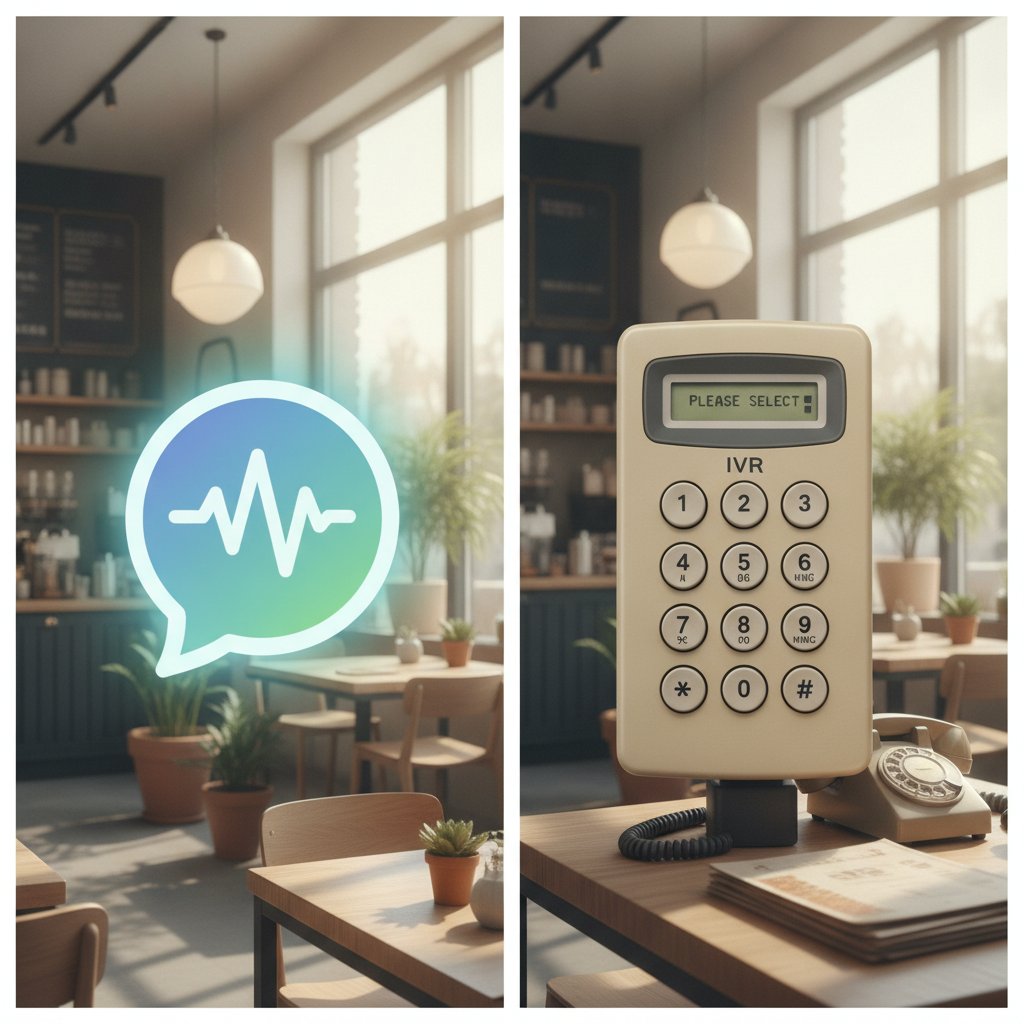
The breakdown on AI Phone Ordering vs IVR comes down to who actually does the work: conversational voice agents talk to guests, punch complex tickets directly into your POS, and upsell sides on their own. Legacy IVR systems just trap callers in Phone trees until someone on your floor finally picks up the receiver.
It’s 6:45 PM on a Friday. The kitchen printer is spewing tickets onto the floor. Up front, your host is trying to seat a party of six while the counter Phone rings off the hook. Two rings. Four rings. On the sixth ring, the caller gives up and orders takeout from the Thai spot down the block. That missed call just cost you a $45 check.
Every operator knows this pain. For thirty years, restaurants turned to Interactive Voice Response (IVR) systems to manage the volume. We all Know the script: “Press 1 for store hours. Press 2 to place an order.” But guests calling for takeout don’t want a Phone directory. They want to order dinner and get off the Phone. Modern Restaurant voice AI replaces touch-tone menus with real conversational intelligence that takes orders without staff intervention.
What is the Core Difference in AI Phone Ordering vs. IVR?
Execution is the whole distinction. An IVR routes calls. AI actually does the job.
A standard IVR runs callers through numeric prompts before dumping them onto a hold queue. Your staff still has to stop what they’re doing, grab the receiver, and punch the ticket into the register manually. Conversational AI skips that bottleneck entirely. It listens, understands spoken modifications, quotes prices, charges the card, and fires the order straight to the kitchen display.
A classic McKinsey on automation in customer service study made this point years ago: automation works best when it absorbs repetitive tasks so human staff can focus on the guest in front of them. Voice AI lets your front-of-house staff focus on in-person hospitality instead of running around like switchboard operators.
| Operational Metric | Legacy IVR Systems | AI Phone Ordering (StrideQ) |
|---|---|---|
| Order Taking Capability | None (Routes caller to staff queue) | Full voice-to-POS menu Ordering |
| Customer Interface | Keypad entry (“Press 1, Press 2”) | Spoken natural conversation |
| Simultaneous Call Capacity | Limited by staff lines (Callers hold) | Infinite concurrent Phone orders |
| Upselling Consistency | 0% (Incapable of dialogue) | 100% reliable smart upselling prompts |
| Menu & Modifier Logic | None | Handles complex substitutions and allergies |
Difference 1: Rigid Push-Button Trees vs. Natural Human Dialogue
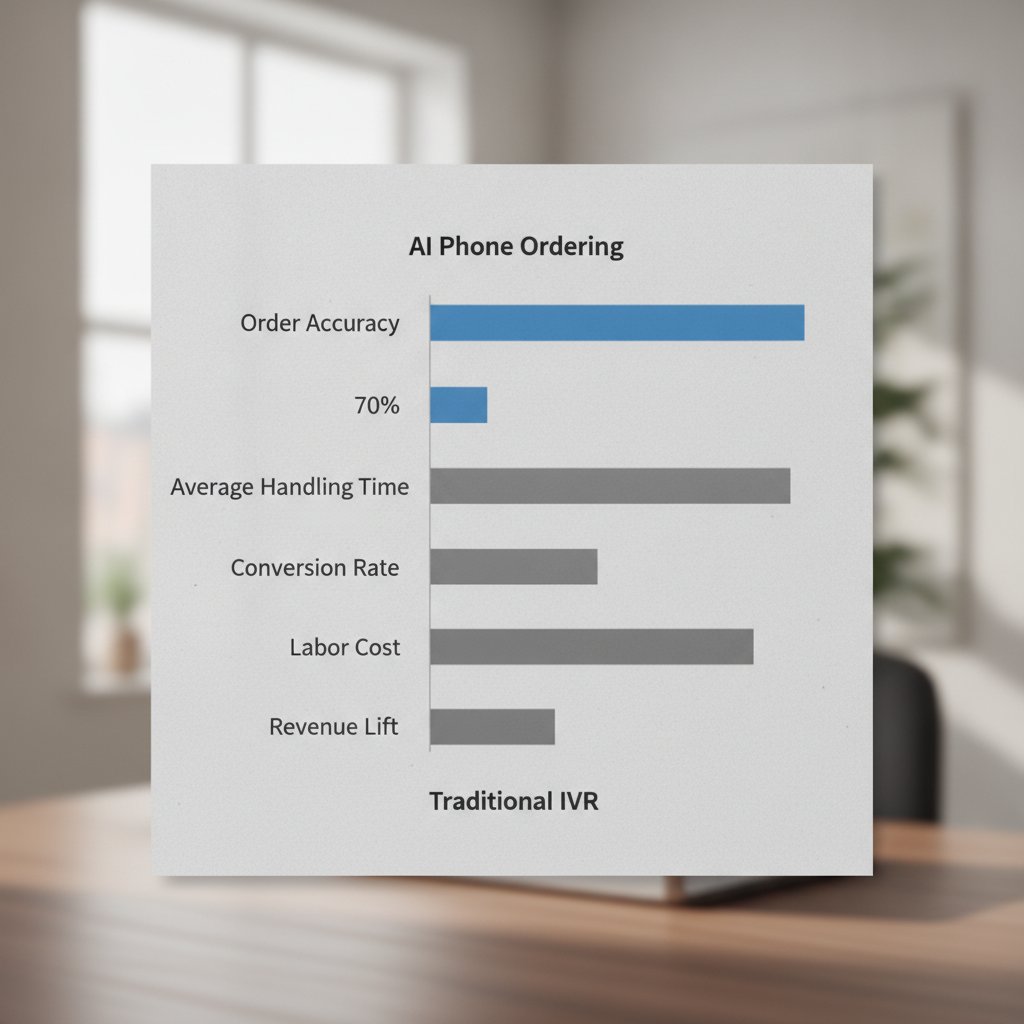
Nobody wants to punch numbers into their screen while driving home from work. Touch-tone IVRs make callers step through rigid decision trees. Hit the wrong number, and you’re back at the main menu. Within twenty seconds, people start hammering zero or shouting into the microphone just to reach a person. It puts callers in a foul mood before your team even greets them.
Conversational agents handle speech the way humans do. A customer says: “Give me two large pepperonis, make one thin crust, extra sauce, no oregano.” The engine parses the size, crust profile, and sauce modifiers without missing a beat. It tracks messy phrasing, handles mid-sentence corrections, and clarifies options on the fly. Real-time voice processing cuts caller friction by letting guests speak casually instead of navigating rigid numeric Phone menus.
Check out How StrideQ AI Phone Ordering Works for a look under the hood at how spoken orders turn into clean POS data.
Difference 2: Handling Concurrency and Ending the “Hold” Trap
Analog systems scale with bodies, not demand. If five customers call your Restaurant at 7:00 PM, you need five free Phone lines and five free employees to take those orders. Lean kitchens don’t have that staff. So four of those five callers get parked on hold.
Roughly 30% of callers hang up after two minutes on hold. Most don’t call back.
Operational Fact: When ten customers call at the exact same moment on Friday evening, AI Phone Ordering handles Every single conversation in parallel with zero seconds of hold time.
Software doesn’t get overwhelmed by spikes. When twenty callers dial in at the same instant, the system answers all twenty immediately. Infinite Phone concurrency guarantees your Restaurant captures Every incoming order during peak rushes without hiring dedicated order takers. The system accepts the order, processes the card payment, pushes the ticket to the kitchen, and leaves your floor crew free to run food.
Difference 3: Order Accuracy and Point-of-Sale Integration
Taking food orders over the Phone in a loud dining room is asking for mistakes. Background music blares, glasses clatter, and handwriting gets messy on quick tickets. A cashier writes down garlic bread instead of cheese bread. The kitchen cooks the wrong appetizer. The customer gets home, discovers the mistake, and leaves a brutal one-star review. You lose the guest, and you eat the cost of remaking the food.
An IVR does nothing here because it can’t take orders. It just passes the call to an employee juggling three other tasks.
Modern voice agents integrate directly with your menu database. They match customer requests against current POS items, confirm modifier rules, and read back the exact order and total before finalizing the charge. Direct POS integration prevents expensive remake costs by verifying Every modification and price before the ticket prints in the kitchen.
See how the operators among Restaurants Using StrideQ protect ticket accuracy during their heaviest volume shifts.
Difference 4: Predictable Revenue Uplift via Automated Upselling
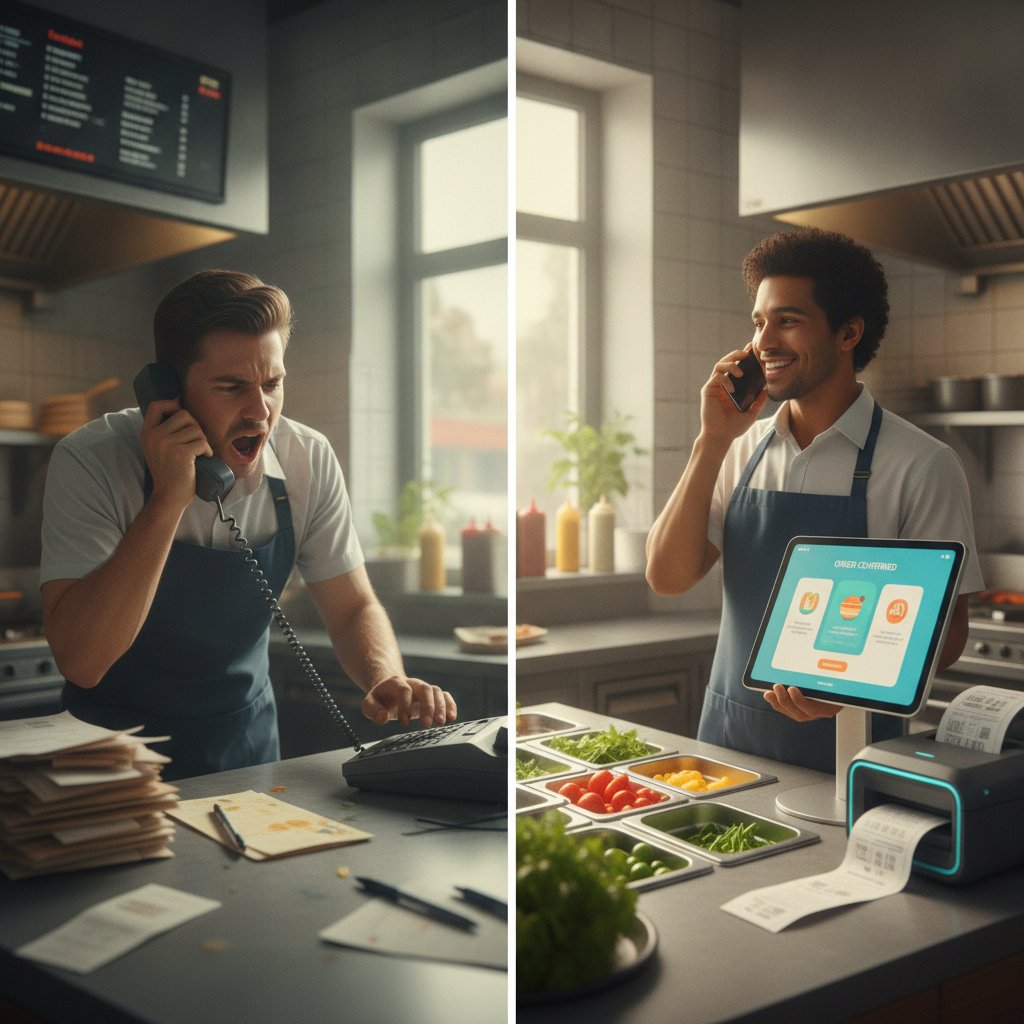
Busy floor workers rarely upsell. When tickets pile up and patrons stand at the host stand, staff rush through calls to hang up. They don’t suggest an appetizer, a drink, or extra dipping sauce. That haste costs money.
An IVR can’t upsell because it can’t hold a conversation. Voice AI does it on Every single call without fail. When someone orders wings, it asks: “Do you want blue cheese or ranch with that?” If they order a burger, it asks about fries and drinks. Programmatic upselling on Every eligible takeout call reliably lifts average order value by 12% to 20%. Over a full month of dinner services, those two-dollar and four-dollar add-ons build meaningful profit.
Difference 5: Staff Relief, Labor Efficiency, and Floor Morale
Front-of-house churn remains brutal across the industry, and constant Phone interruptions don’t help. Asking servers to bag orders, run food, check on tables, and answer ringing handsets leads straight to burnout. In-store guests notice when a host ignores them to pick up a Phone.
Comparing an AI system to Traditional Phone setups shows the operational divide. An IVR simply pauses the interruption before dumping the call right back on your team. An AI voice agent answers, completes the order, and closes the ticket without pulling anyone off the floor. Automating Phone orders gives your kitchen and counter crew back two to three hours of uninterrupted floor time Every shift.
How Should a Restaurant Transition from IVR to Conversational AI?
Switching from legacy Phone trees to conversational voice AI doesn’t require new hardware or weeks of staff training. Here is how operators handle the rollout:
- Clean up POS menu items: Standardize item names, modifier groups, and sizes in your point-of-sale system so the engine maps dishes cleanly.
- Set up call forwarding: Route overflow or all incoming takeout calls from your primary number to the AI voice number, keeping your listed Google and Yelp numbers identical.
- Set store policies: Enter your rules for catering cutoffs, holiday hours, parking instructions, and allergy protocols.
- Run test calls: Place mock orders with split toppings, weird substitutions, and canceled items to confirm everything routes to your POS correctly.
- Launch during a slow shift: Turn the line on during a Tuesday lunch, inspect the kitchen tickets, and verify credit card settlements before letting it handle Friday night volume.
A steady five-step rollout keeps orders moving without disrupting daily service during the transition.
Frequently Asked Questions
Can conversational AI handle heavy accents and noisy backgrounds?
Yes. Modern speech models filter out car road noise, kitchen clatter, and wind while handling diverse regional accents. If an audio detail isn’t clear, the system asks the caller to repeat the item instead of guessing.
What happens if a customer insists on speaking to a live human employee?
The system honors the request and forwards the caller straight to your floor Phone. It avoids loops and transfers immediately when asked.
How does AI Phone Ordering handle out-of-stock menu items?
Because the platform syncs with your POS, 86’d items update in real time. When your kitchen marks an item out of stock, the voice agent informs callers right away and suggests alternatives.
Do I need to change my Restaurant’s existing Phone number?
No. Keep the numbers you already have on your website, menus, and Google Business profile. You simply set your Phone carrier to forward calls to the automated system.
Stop Missing Revenue During the Dinner Rush
Never let a customer sit on hold again. Try StrideQ’s AI-driven Phone automation risk-free, eliminate missed Phone orders, and start capturing Every caller today.