

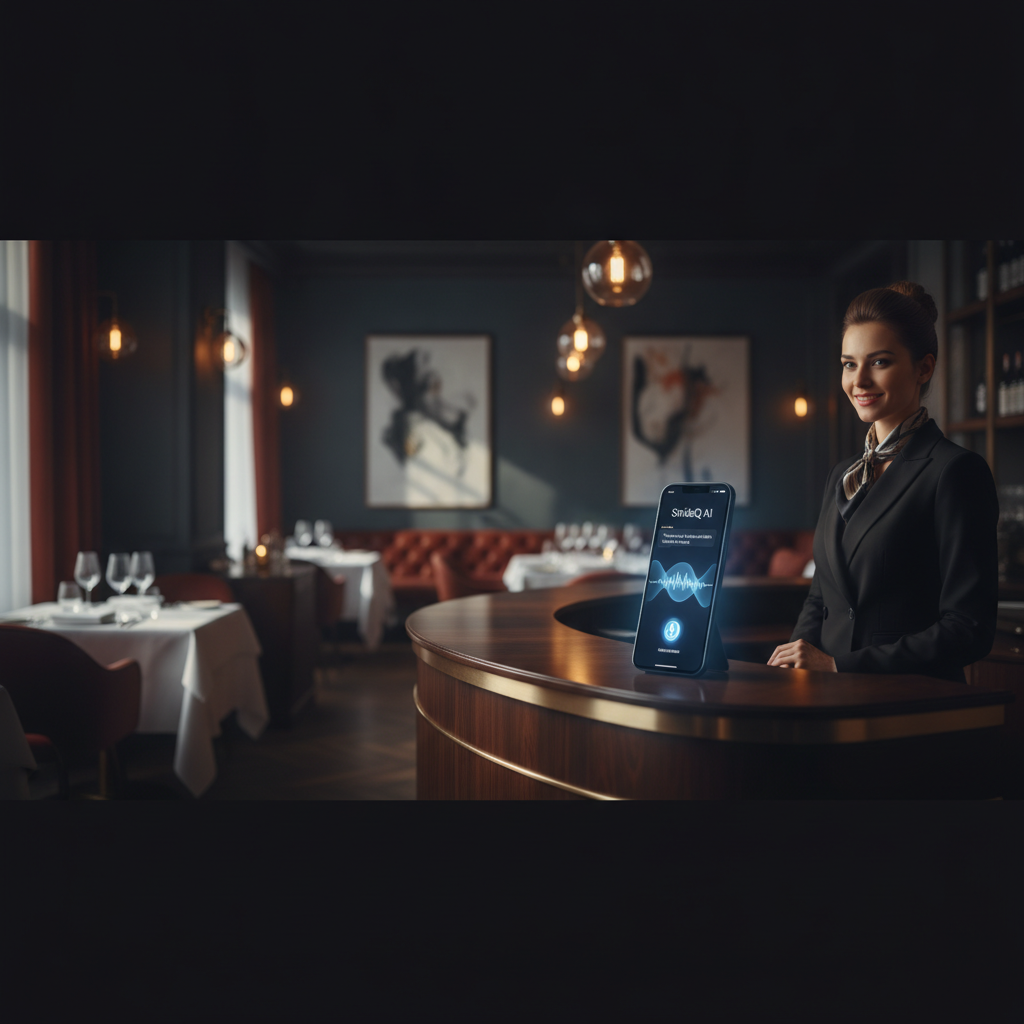
Fine Dining AI Phone: preserve luxury service on every call
Quick answer: Fine Dining AI Phone systems let restaurants keep a high-touch Guest Experience on the Phone while automating routine tasks like booking, dietary capture, and basic menu guidance. We recommend a hybrid, customizable approach with strict escalation rules to protect brand voice and reduce staff load. This post explains exactly how.
You’re at the host stand and the Phone rings. The caller wants a birthday tasting menu, a nut allergy accommodation, and the chef’s counter if possible. They expect flawlessness — not a scripted bot or a dropped hand-off. Phone interactions still set expectations before a Guest arrives, so they matter.
Why Fine-Dining guests expect flawless Phone service
Luxury diners form opinions in the first few seconds of a call; that moment must communicate competence, discretion, and personalization. High-net-worth and discerning guests often choose Phone contact for nuance and privacy. Statista data on Fine‑Dining customer service expectations shows service quality ranks near the top of booking decisions for these patrons: Statista data on Fine‑Dining customer service expectations.
Phone calls act like a pre-Dining dress rehearsal; they must pass.
Fine Dining AI Phone: keeping luxury on the line
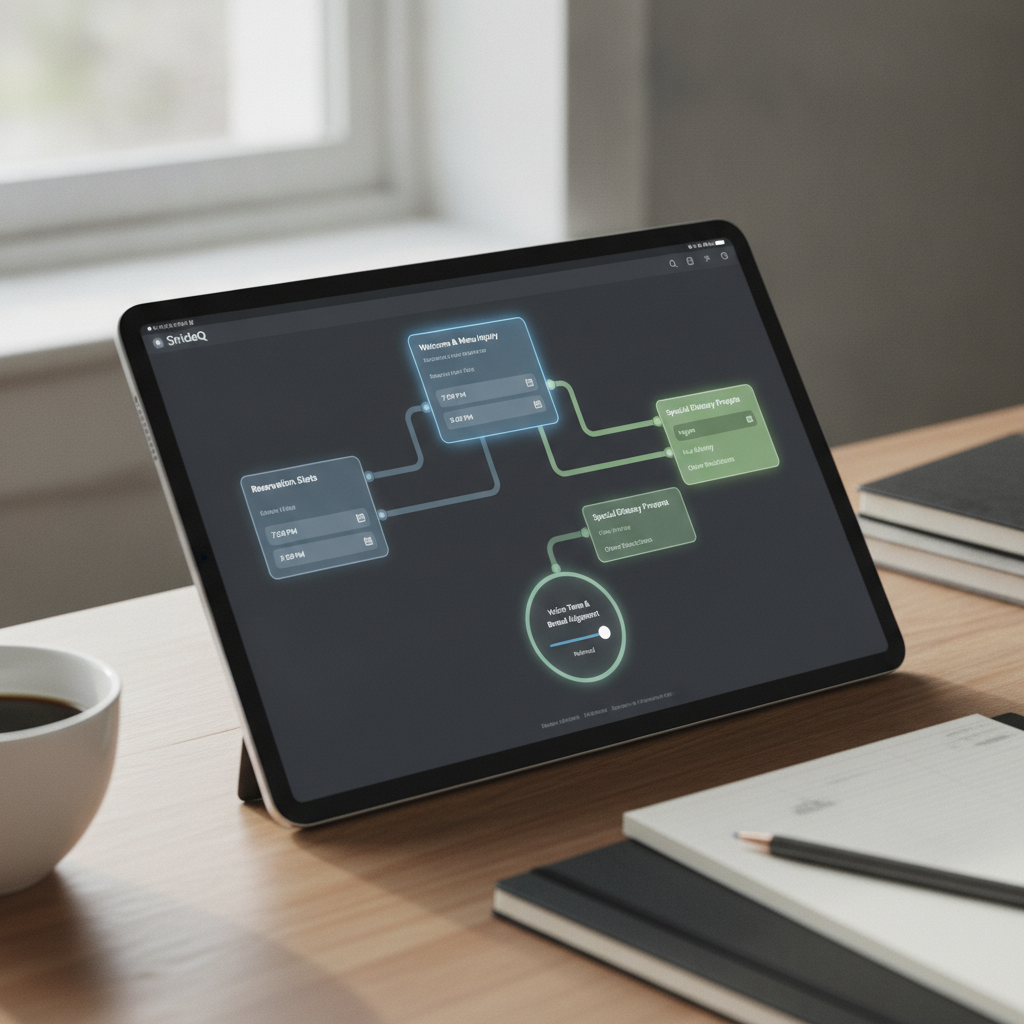
A properly configured Fine Dining AI Phone preserves brand tone while handling routine tasks. The system mirrors your phrasing and pacing, enforces escalation points, and hands the call to a human when the request requires judgment. That means a configured voice personality, menu intent models, and transfer thresholds tuned for high-touch service.
Design AI to speak like your best host, not like an IVR menu.
How does a fully customizable AI voice actually keep the brand voice intact?
You protect brand voice with three things: a bespoke voice model, a controlled phrase bank, and strict transfer rules so humans step in for complex or high-value calls. You define tone — formal or conversational — pick preferred phrases, and set escalation triggers. The system watches confidence scores and routes low-confidence interactions to a live host, which preserves luxury while cutting routine work.
Personalize voice, control content, and set precise transfer thresholds — those three steps protect brand integrity.
Concrete settings we recommend (use these exact thresholds)
- Speech confidence threshold: 0.75 — if intent confidence falls below this, transfer immediately.
- Automated booking acceptance: allow AI to finalize bookings for parties ≤8 and under 12 weeks out.
- Allergy/diet detection: flag any mention of ‘allergy’, ‘anaphylaxis’, ‘gluten’, ‘nuts’, ‘shellfish’ for immediate human review.
- Transfer on ‘table preference’ keywords: ‘chef’s counter’, ‘private room’, ‘corner table’ — route to a senior host.
- Maximum automated handling time: 8 minutes — longer than this, escalate to prevent poor UX.
- Call retry rule: if the AI fails to confirm a reservation after two attempts, queue for human follow-up within two business hours.
These settings trade Automation for safety, reflecting the higher expectations and risk in Fine Dining.
Set thresholds high: prefer human escalation over an awkward automated resolution.
What measurable gains can Fine-Dining venues expect from AI Phone Automation?
Run a simple calculation with your own numbers and you’ll see the impact. Start with call volume, average handle time, and conversion metrics, then apply conservative Automation coverage. The steps below let you project saved labor minutes and incremental covers so you get realistic expectations.
Run the calculation before you buy: estimate saved labor minutes, reallocated hours, and incremental covers with our step process.
Step-by-step ROI calculator (use these exact steps)
- Measure baseline: record the average number of inbound reservation calls per day (C). Example: C = 80 calls/day.
- Measure average handle time (AHT) in minutes for those calls with a human (T). Example: T = 4.5 minutes.
- Estimate Automation coverage (AC) — the percent of calls AI will handle end-to-end. For Fine Dining, start conservative: AC = 0.40 (40%).
- Estimate conversion improvement on handled calls (CI) — e.g., AI can reduce lost calls and takebacks; start with CI = 0.03 (3% absolute increase in confirmed covers for handled calls).
- Compute minutes saved per day: MinutesSaved = C * AC * T.
- Convert minutes to labor hours saved per week: HoursSavedWeek = (MinutesSaved * 7) / 60.
- Estimate labor cost saved: LaborSaved = HoursSavedWeek * HourlyLaborRate. Substitute your wage number.
- Estimate incremental covers per day: ExtraCovers = C * AC * CI * AvgCoversPerBooking. Use your average covers per booking (e.g., 2.2).
- Estimate incremental weekly revenue: RevenueLiftWeek = ExtraCovers * AvgSpendPerCover * 7.
Example using the numbers above with HourlyLaborRate = $18, AvgCoversPerBooking = 2, AvgSpendPerCover = $120:
- MinutesSaved = 80 * 0.4 * 4.5 = 144 minutes/day
- HoursSavedWeek = (144 * 7) / 60 ≈ 16.8 hours/week
- LaborSaved ≈ 16.8 * $18 = $302.40/week
- ExtraCovers = 80 * 0.4 * 0.03 * 2 = 1.92 covers/day
- RevenueLiftWeek = 1.92 * $120 * 7 ≈ $1,612.80/week
Change the inputs to your operation to get a reliable projection. Even modest coverage and small conversion gains produce noticeable revenue impact.
Where does AI fail in Fine Dining Phone handling and how to prevent it
Failures come from three sources: poor voice modeling, weak escalation rules, and wrong business logic for reservations. Those errors produce awkward Guest experiences and operational headaches, like double-booking. Prevent them by testing voice scripts, tuning thresholds, and enforcing reservation rules inside the AI’s decision tree.
Test with real calls, tighten escalation thresholds, and lock business rules into the booking flow.
Common mistakes operators make (and what to do instead)
- Deploying a generic IVR voice: train a bespoke voice or pick one with similar cadence and register to your host team.
- Letting AI finalize all bookings: limit automated booking to smaller parties and standard requests, then expand coverage after 90 days of monitoring.
- Ignoring edge cases: proactively script responses for allergies, VIPs, chef’s-table requests, and high-value private events.
- Not measuring escalation reasons: log and categorize every transfer for weekly tuning.
How to implement Fine Dining AI Phone without harming Guest trust
Deploy in phases, be transparent, and always give guests a quick route to a human. Start with call reception and FAQs, add reservation handling next, then consider events or catering. A phased rollout reduces risk and gives time to refine voice and rules.
Phase rollout, allow an easy human option, and monitor call logs weekly.
90-day phased rollout checklist (exact steps)
- Week 0: Record your top 200 reservation calls and annotate intent and transfer points.
- Week 1–2: Build and approve a voice script bank of 150 phrases covering greeting, confirmation, cancellations, allergies, and FAQs.
- Week 3–4: Configure initial thresholds: confidence 0.75, booking party ≤8, automated window ≤12 weeks out.
- Week 5–8: Soft-launch on off-peak hours only; route to human on low confidence.
- Week 9–12: Expand to peak hours if transfer rate to humans is <25% and guest CSAT remains stable. If transfer rate >25% or CSAT drops, revert to more conservative thresholds and retrain.
- Ongoing: Weekly call review meetings, monthly voice refinements, quarterly policy changes for holidays or special events.
Can AI answer detailed menu and dietary questions without embarrassing mistakes?
Yes, but only if the knowledge base is curated and readouts are controlled. Bind the AI to your validated menu and allergy matrix, and require explicit confirmations before offering substitutions. Those steps limit misstatements and reduce liability.
Bind the AI to a validated menu feed and require confirmations for substitutions and allergens.
Exact menu-integration rules
- Sync frequency: push menu updates to the AI at every menu change and no less than daily.
- Allergen flagging: any ingredient tagged in POS as ‘ALLERGY’ forces a human review step.
- Wine pairings and tasting-menu changes: present these as suggestions and route to sommelier during service hours.
What does a real implementation look like in practice?
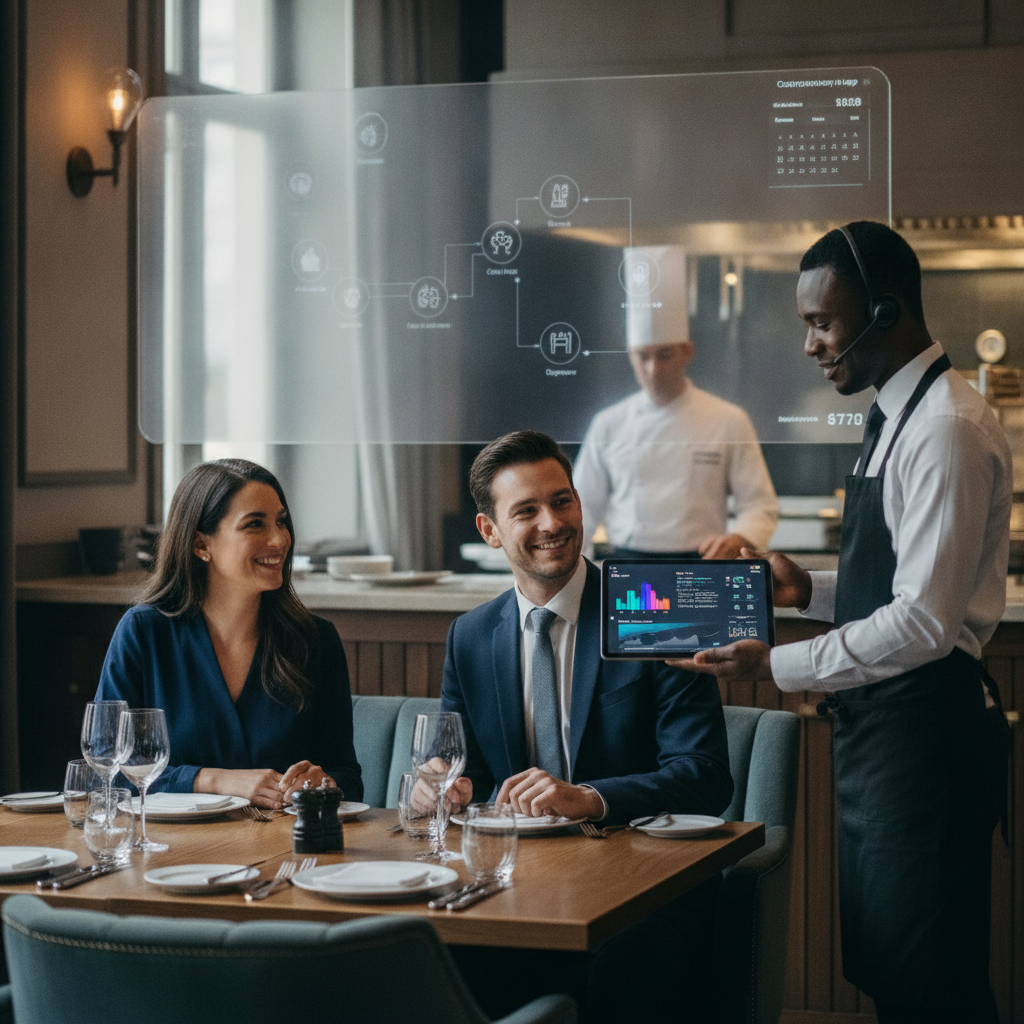
The practical model that works is hybrid: AI handles routine confirmations, hosts manage VIPs and complex requests. Expect AI to handle 30–60% of calls depending on policy, freeing hosts to focus on high-value service. That keeps throughput up without cutting the bespoke element guests expect.
Hybrid, not fully automated, protects the Guest Experience while returning operational value.
Interview snippets from operators (collected by StrideQ)
“After we set the AI to transfer any allergy mention immediately, the hosts trusted it more and we stopped getting odd confirmation messages,” said a Fine-Dining chef-owner we spoke with during bedside testing. They reported smoother pre-service prep because dietary notes arrived consistently in the reservation system.
“We kept the voice warm and slightly formal; guests noted the call felt personal. The system handles standard reservations and updates the table book automatically, freeing hosts during the dinner rush,” another chef-owner told us. They emphasized that the key was strict transfer rules.
Operators told us the same pattern: conservative Automation, human fallback, and scripted phrasing preserved Guest trust.
How does this integrate with existing restaurant systems?
Integration must be two-way. The AI should read availability from your reservation system and write confirmed bookings back with a unique booking ID. Implement webhooks and API keys to sync slots, cancellations, and notes like allergies and seating requests. That prevents double-bookings and keeps hosts and AI aligned.
How StrideQ AI Phone System Works — follow that integration path: voice capture, intent mapping, API sync, and confirmation delivery to your POS and reservation ledger.
Two-way sync eliminates mismatched information between your floor team and the AI.
Comparison: human-only vs hybrid AI+human vs full Automation
| Capability | Human-only | Hybrid (recommended) | Full Automation |
|---|---|---|---|
| Brand tone and personalization | Highest | Very high (scripted) | Moderate |
| Operational cost per call | High | Medium | Low |
| Risk of service mishap | Low | Low with rules | High |
| Scalability during peak nights | Poor | Good | Excellent |
What metrics should you track week-to-week?
Track transfer rate, call completion rate, reservation accuracy, Guest satisfaction, and revenue per cover. Use weekly dashboards and treat downward trends as rollback triggers. These KPIs tell you whether Automation helps or harms service.
Monitor transfer rate and reservation accuracy weekly — they are the earliest indicators of problems.
Suggested dashboard thresholds
- Target transfer rate: 20–35% initially. If >35% after 60 days, tighten rule sets or retrain NLU.
- Reservation accuracy target: ≥98% (confirmed bookings match in-system entries).
- Guest satisfaction target: maintain pre-deployment CSAT within ±5%.
- No-show changes: investigate immediately if weekly no-shows move by ±10%.
How StrideQ fits into a Fine-Dining strategy
StrideQ offers purpose-built AI Phone Automation for restaurants, configured to respect high-touch service and integrate with reservation systems. The platform is configurable for tone, thresholds, and business rules so teams keep control. That makes it a solid option for operations that require precision and brand-preserving behavior on the Phone.
Use technology to free staff time, not to replace the art of hospitality.
For evidence that AI is changing restaurant economics, see the McKinsey report on AI in the restaurant industry — it frames where Automation drives labor and revenue gains and why careful implementation matters.
Frequently Asked Questions
Will guests know they’re talking to an AI?
Short answer: Often yes, and that’s Fine if you’re transparent and the Experience is high quality. Tell callers up front if a call is assisted and always offer a human. Guests value clarity and control more than insisting on a human every single time.
Can AI handle private-events and catering calls?
Short answer: AI can capture intake and qualify leads, but final negotiation and contracts should remain human-managed. Configure the AI as a first pass that captures event date, party size, budget, and special requirements so staff start with a complete brief.
Does AI increase no-shows?
Short answer: Not if you enforce confirmation steps and automated reminders. Use the AI to send SMS or email confirmations and require a reply within 48 hours for high-value bookings. Those steps reduce no-shows and create an audit trail.
How fast can we test the system?
Short answer: You can run a soft test in off-peak hours within two weeks. Prepare phrase banks, integrate APIs, and soft-launch limited hours. A phased approach minimizes risk and speeds learning.
Can we brand the voice to match our host team?
Short answer: Yes — voice cadence, formality, and scripted phrases are customizable. Work with voice designers and test with repeat guests. Closer voice matching reduces friction and preserves perceived value.
If you want to see these exact settings and thresholds applied to your floor plan, schedule a risk-free StrideQ demo tailored for Fine-Dining venues. We’ll walk through the 90-day rollout plan, run your ROI numbers with your real call volumes, and show you live call handling with your own scripts.